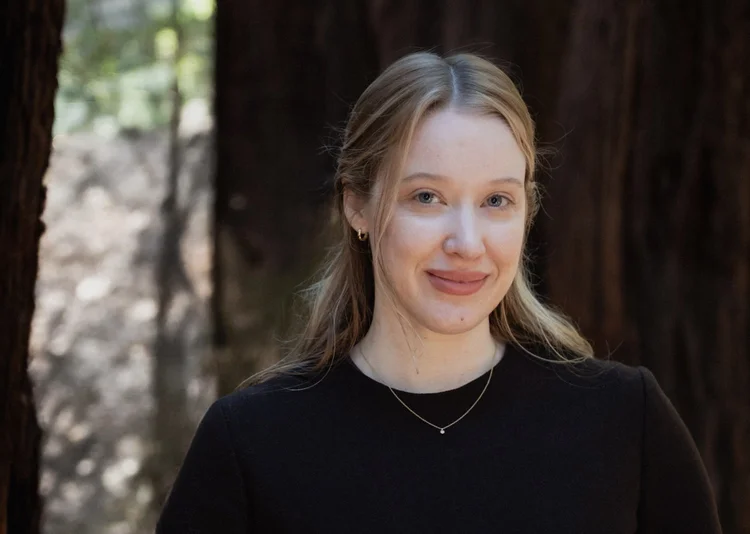
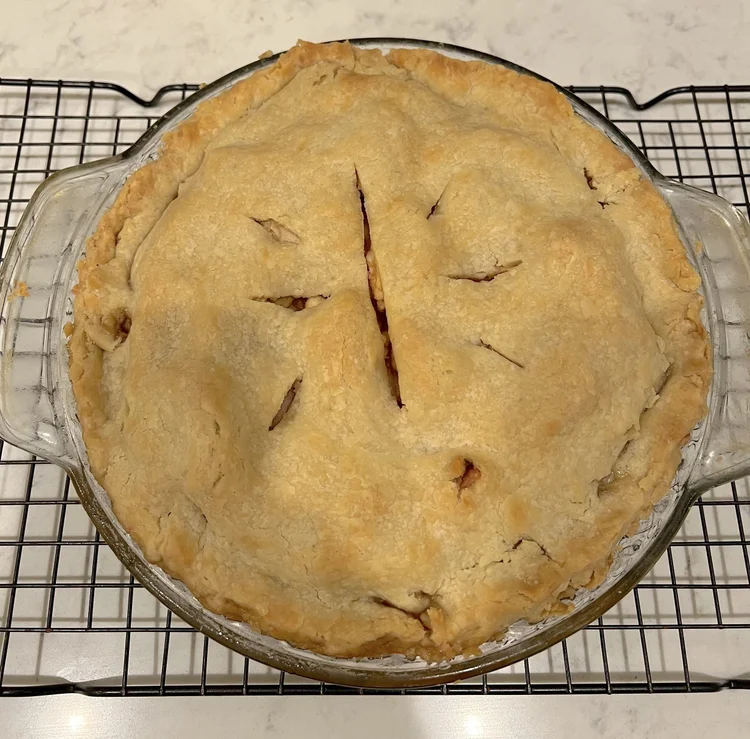
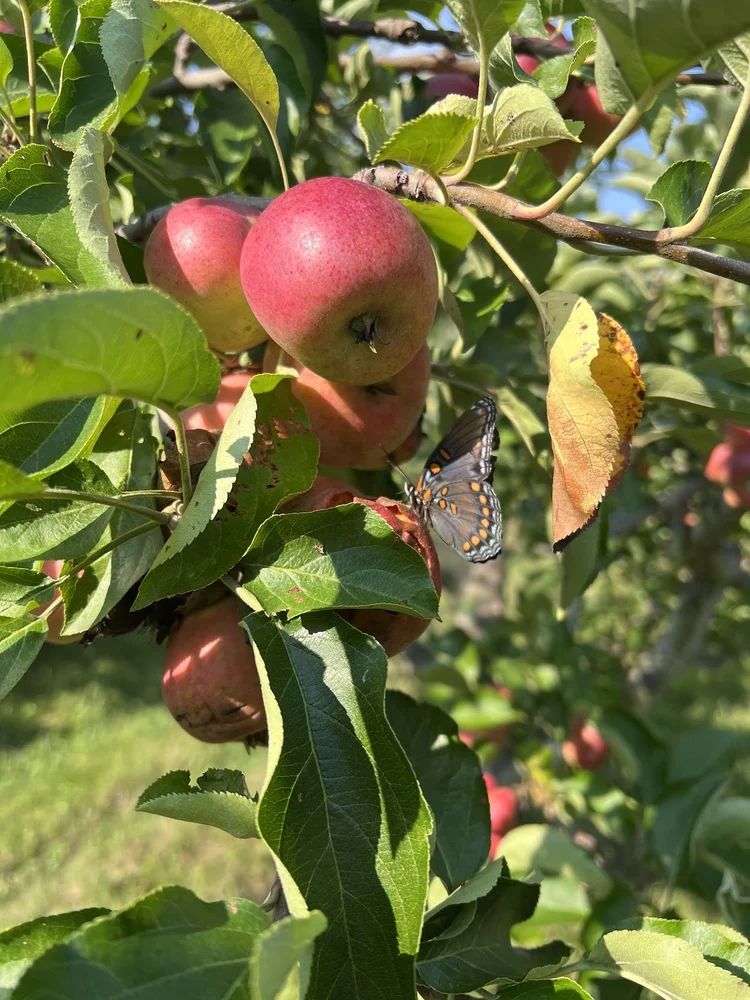
An Interview with Chloe Benjamin1. When you first imagined Laurel’s childhood, what made you choose an orchard as the backdrop? The initial spark of the novel came in 2020, when I heard about ANITA, a neutrino experiment at Antarctica’s McMurdo base. ANITA had detected unusual results, which were then speculatively linked to the (also speculative) idea of a two-sided, CPT-symmetric universe. In this model, the Big Bang created two universes: the one we know, and a second universe where properties like time are inverted. (The theory in Under Story, known as the Duoverse, is a heavily fictionalized version!) At the same time, I knew that I wanted to write about the universe of marriage. I wish I could remember the moment when I connected those two points to the orchard. I know it happened early, and that it had to do with the way that the landscape of Door Creek Orchard mirrored the concepts I wanted to explore through the Duoverse. There are two orchards, Upper and Lower, a duality that echoes imagery in the novel. The idea of a tree itself—how only half of the tree is visible above ground, and how the roots roughly mirror the branches—felt similarly symbolic, a physical representation of various concepts in the novel: the Duoverse’s cosmology, but also the relationship between the consciousness and the subconscious (or, put differently, the relationship we have with ourselves). 2. What did spending time at Door Creek Orchard unlock for you that you couldn’t have invented from afar? Was there anything that surprised you about the orchard and/or our family’s life in the 1980s and 1990s? Oh my gosh, so many things! Under Story is very much about the natural world, and to some extent, I still feel like an imposter when writing on that subject. Unlike you, or my husband, Nathan (a sustainability professional), I grew up as a city kid. I wrote Under Story while coming into relationship with nature for the first time. Door Creek Orchard was—no pun intended!—a door for me, as were you and your family. Imagination is obviously a crucial part of novel-writing, but fiction comes alive through detail. The stories you shared about the farmhouse in which you grew up were more fascinating than anything I could make up! (Some favorites: the wasp nest in the wall, the toilet that almost fell through the bathroom floor, and the multitude of cat doors that had been created by a former occupant.) And in general, if I zoom out and think about what the orchard offers the novel, it’s a home base for the reader as well as for Laurel, the protagonist. Laurel’s emotional attachment to the orchard transforms it from object to subject. And I think that’s what has to happen for people to be motivated enough to protect the environment in real life. In order to care for it, we have to care about it, which happens through curiosity, learning, engagement. I was experiencing that in real time while writing the book, connecting with nature more broadly, and I also saw it in your family’s relationship with the orchard. That relationship is active and reciprocal. The orchard gives you food and livelihood, but you work just as hard to nurture it. Not infrequently you have to be out with the trees doing some procedure in the middle of the night. I find it very moving. Even for those of us who aren’t orchardists, I think your process is inspiring, a model for how to tend to our environments. 3. Madison and the UW play a large role in the book as well. You could have written about any university town as a setting – Why Madison specifically? Madison is the one I knew! I do so much research for my fiction and yet I find place one of the hardest things to write about without lived experience. I came to Wisconsin from California, and as a transplant, I noticed all kinds of things that fascinated me. I also love to write about San Francisco, where I’m from, but I think that when I’m in a place where I didn’t grow up, I observe in a different way. 4. Trees are patient, long-lived organisms. Did writing about them change your relationship to time while writing this novel? I mentioned earlier that I grew up as a city kid, but I have always loved trees. Their solidity, their magnificence, their constancy… the ability to find solace in a tree, to feel it pressing back against you or sheltering you, can be a really profound, even spiritual experience. And as you say, they live so much longer (or at least, they can) than we do. I think human beings often look down on plants as simpler life forms because they can’t speak or move, but when it comes to lifespan and resilience they sort of have the last laugh. While writing this book, though, I learned even more about the ways that trees communicate, survive, and collaborate with other organisms. So I think my admiration for them was previously more intuitive or emotional, and now it’s more informed. 5. Fungi, roots, water — the hidden systems beneath visible life play a huge role in the book. Were you consciously writing about unseen networks from the very beginning, or did that emerge naturally? I love how you’ve put that: this hidden systems, or unseen networks, beneath visible life. That came from the beginning, along with this idea of above and below, conscious and subconscious. But it definitely deepened and broadened throughout the years of work on the book. I think I go into a book with certain things I’m interested in, or hoping to explore, and then I search for them in my research and experiences throughout the process. 6. What do you hope readers take with them after finishing the book? I hope it might invite readers to look beyond the self and think about the interconnectedness of all life forms, especially in this time of climate crisis. If Under Story spurs anyone to fight for the protection of our world and all of its inhabitants—or for the importance of physical experience and connection in our increasingly virtual lives—that would be really meaningful to me. As we barrel into the future, I would also love to encourage people to consider what is valuable about the past. Looking backward isn’t always healthy: nostalgia can be obscuring, and thankfully, social progress is generally linear. But I think that the pace of change—technologically, for example—can feel frighteningly mindless right now; it’s becoming more and more difficult to opt out, to choose to do things differently. We’re not given the time to pause and think about whether some of these innovations are actually beneficial or healthy—or for whom. I’d love to offer readers the opportunity to reflect on how they’d like to live, to take choice back. 7. What is your favorite apple? Now we’ve gotten to the hard-hitting questions! I’m going to go with the Pink Pearl, just because I find it magical. What is yours? Liz: Ashmead’s Kernel. Now and forever. 8. Do you have any favorite apple recipes? Nathan’s family apple pie. [Find the recipe below in the Recipe Corner!]
|